Chemotherapy in 2026: Benefits, Risks, and What New Research Reveals
Introduction
For decades, chemotherapy has been one of the most widely used treatments for cancer. Millions of patients worldwide have received chemotherapy as part of their treatment plan, often alongside surgery, radiation therapy, immunotherapy, or targeted therapies.
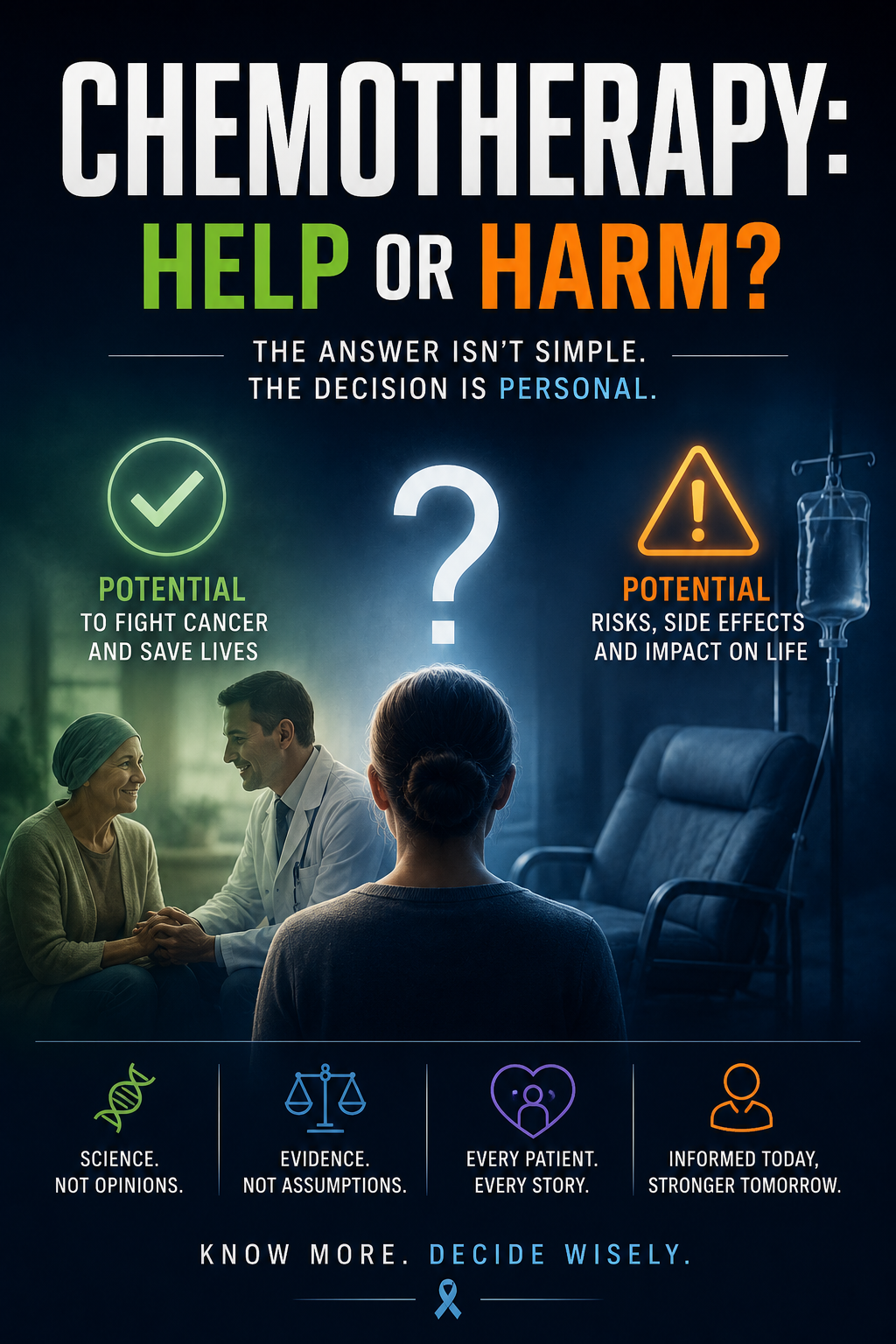
However, chemotherapy remains controversial. While many patients benefit significantly from treatment, others experience severe side effects that can dramatically affect quality of life. Recent research continues to explore both the life-saving potential and the risks associated with chemotherapy.
This article examines the latest scientific evidence regarding chemotherapy’s benefits, complications, and emerging alternatives.
What Is Chemotherapy?
Chemotherapy refers to a group of medications designed to destroy rapidly dividing cells. Because cancer cells typically grow faster than most normal cells, chemotherapy can slow or stop tumor growth.
Unfortunately, some healthy cells also divide rapidly, including those in:
- Bone marrow
- Digestive tract
- Hair follicles
- Reproductive tissues
This explains many of the treatment’s side effects.
The Proven Benefits of Chemotherapy
1. Increased Survival
Numerous clinical trials have shown that chemotherapy can increase survival in several cancers, including:
- Breast cancer
- Colon cancer
- Testicular cancer
- Hodgkin lymphoma
- Certain leukemias
In some cancers, chemotherapy has transformed previously fatal diagnoses into highly treatable conditions.
2. Reduced Risk of Recurrence
Adjuvant chemotherapy is often administered after surgery to eliminate microscopic cancer cells that may remain in the body.
Research shows that this approach can significantly reduce recurrence rates in various cancers.
3. Tumor Shrinkage
In advanced cancer, chemotherapy may shrink tumors enough to:
- Relieve symptoms
- Improve organ function
- Make surgery possible
- Extend life expectancy
The Dark Side of Chemotherapy
Despite its benefits, chemotherapy can cause serious complications.
Common Side Effects
Patients frequently report:
- Fatigue
- Nausea
- Vomiting
- Hair loss
- Loss of appetite
- Cognitive difficulties (“chemo brain”)
- Peripheral neuropathy
While many side effects improve after treatment, some can persist for months or years.
Treatment-Related Mortality
One of the most important topics receiving increased scientific attention is treatment-related mortality.
Chemotherapy suppresses bone marrow function, reducing the production of:
- White blood cells
- Red blood cells
- Platelets
This can increase susceptibility to severe infections.
Febrile Neutropenia
A major concern is febrile neutropenia, a condition involving:
- Extremely low white blood cell counts
- Fever
- Potentially life-threatening infections
Although modern supportive care has significantly reduced risk, treatment-related deaths still occur in a small percentage of patients depending on:
- Cancer type
- Age
- Overall health
- Treatment intensity
Long-Term Effects Under Investigation
Researchers continue to investigate potential long-term consequences of chemotherapy.
Cardiovascular Damage
Certain chemotherapy drugs may increase the risk of:
- Heart failure
- Arrhythmias
- Cardiomyopathy
Cognitive Changes
Many cancer survivors report:
- Memory difficulties
- Reduced concentration
- Slower information processing
Scientists continue studying the biological mechanisms behind “chemo brain.”
Secondary Cancers
Some chemotherapy agents may slightly increase the risk of developing a second cancer years after treatment.
However, the overall survival benefits often outweigh these risks.
What New Research Is Revealing
Recent studies are focusing on precision medicine approaches that attempt to reduce unnecessary chemotherapy exposure.
Genetic Profiling
Advanced genomic testing can help identify patients who are:
- More likely to benefit from chemotherapy
- Less likely to respond
- At higher risk of toxicity
Biomarker-Guided Treatment
Researchers are increasingly using biomarkers to determine which patients may safely avoid chemotherapy while maintaining excellent outcomes.
This approach may reduce overtreatment and improve quality of life.
Emerging Alternatives to Traditional Chemotherapy
Several newer cancer treatments are changing oncology practice.
Immunotherapy
Immunotherapy helps the immune system recognize and attack cancer cells.
In some cancers, immunotherapy has produced long-lasting responses.
Targeted Therapy
Targeted drugs attack specific genetic mutations within cancer cells while causing less damage to healthy tissue.
Personalized Medicine
Scientists are increasingly tailoring treatment plans based on:
- Tumor genetics
- Molecular markers
- Individual patient characteristics
Why the Debate Continues
The debate surrounding chemotherapy often stems from differences in outcomes among patients.
Some individuals experience:
- Long-term remission
- Cure
- Extended survival
Others may experience:
- Significant toxicity
- Limited benefit
- Reduced quality of life
This variation highlights the importance of individualized treatment decisions rather than a one-size-fits-all approach.
Conclusion
Chemotherapy remains one of the most important tools in modern cancer treatment. Scientific evidence demonstrates that it can save lives, reduce recurrence, and improve survival in many forms of cancer.
At the same time, chemotherapy is associated with significant risks, including serious side effects, treatment-related complications, and potential long-term health consequences.
The future of oncology increasingly focuses on precision medicine, aiming to identify which patients are most likely to benefit while minimizing unnecessary exposure to toxic treatments.
As research advances, the goal is not simply to treat cancer more aggressively but to treat it more intelligently.